Excellence in the casting process
Manhole covers, gully gratings and pipe fittings are the least glamorous castings a foundry makes, and among the hardest to get right at volume. They live outdoors, under load, for decades.
Specifying them is mostly about three things: the load class the part must carry, the ductile iron grade that carries it, and the coating that survives the ground it is buried in.
Where technology actually pays off
Automation pays back fastest where it removes variation rather than labour: pouring, molding, fettling and dimensional inspection. Applied anywhere else it mostly adds complexity.
The test we apply before any investment is simple — does this make the ten-thousandth casting more like the first?
metallurgical control
Chemistry, cooling and heat treatment under one roof
in-house tooling
Pattern shop and simulation in the same building
Training and skills on the foundry floor
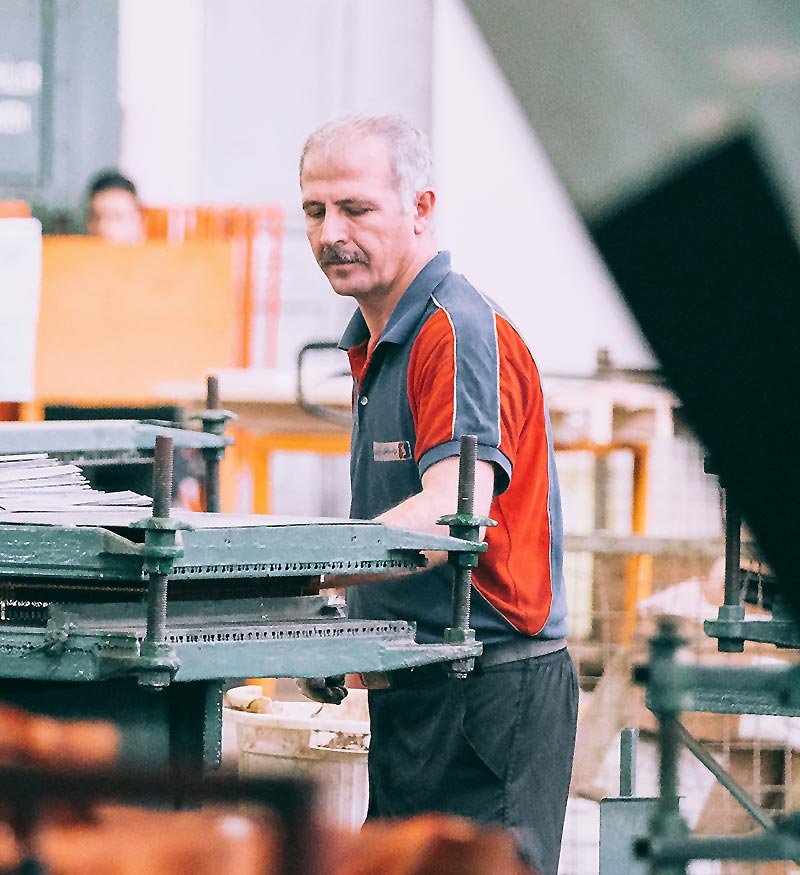
Foundry skill is not learned from a manual. Inmore pairs experienced melter, molders and fettlers with apprentices on the line, and rotates engineers through the pattern shop, the laboratory and the machining division so that decisions are made by people who have seen the consequences.
about
inmore metal group
An integrated casting base producing precision iron, steel and aluminium components for industry worldwide.